Life in the “Village,” as it was known, was forever fascinating. Albright Training Center was across from the helipad and maintenance depot. I used to hike past the helicopter and a collection of aged vehicles on my way to work at the clinic. I developed a special fondness for their Bobcat, a junior Caterpillar chunk of machinery I passed each morning on the way to work. It was also my nickname as a youth in Australia.

The Park Service’s helicopter was small but made frequent trips into the backcountry to help Rangers with their duties. On rare occasions it rescued a hiker or one of the rafters on the River. I heard others address the pilot as “Seagull.” Being curious, I asked where he had acquired that nickname. With a laugh, I was told that it was because one had to throw rocks at him to get him to fly.
One of the vehicles in the maintenance yard was a water tanker. The first time I saw it drive by on the way to a delivery, I was astounded. Water was STREAMING out of the tank in countless gushing flows; a goodly collection of small round leaks. I was surprised it could deliver water anywhere more than half a mile from the source. How many bullets might be rattling round inside I will never know, but it had certainly been used for target practice. I wondered if the driver received hazard pay.
Most of the mercantile activity surrounded the gift shops at the rim. One source of amusement for Park staff was that after spending five minutes gazing at the Canyon, tourists would spend the remainder of their time at the Park sorting through the bric-a-brac to find the perfect souvenir or gift for Aunt Betty.
I had discovered Babbitt’s General Store on my first visit. I was relieved that the prices were not too outrageous, considering the location. I certainly did not want to make the long drive to Flagstaff too frequently. A mixture of groceries, camping supplies, and – yes – bric-a-brac, Babbitt’s had it all. Or at least it met most of our needs.

“If that guy was six-foot tall with green teeth, gettin’ nasty in a bar and messin’ with your gal, you would have kicked him right between the eyes!” John would later praise my hackeysack kicks that way, but it was not always so.
Evening entertainment at the Canyon was never complete, said John, without some hackeysack, which swiftly replaced our strolls down to the rim for the sunset ritual. I had never played the game before, which involves standing in a circle kicking a small somewhat saggy leather ball.
We were told there were three rules.
- Never serve the hack to yourself.
- Don’t hit the hack with your hands or arms below the shoulders.
- As with love, NEVER say you are sorry!
A round where everyone managed to kick the sack was a “hack,” and a cause for much celebration. No sides, no winners or losers. A team competition against the universe and gravity. When well played, a thing of beauty, a dance to lift, flick, suspend, and float the sack to the next player, eager to do his or her own thing. The Canyon had some hack masters, and it was a joy to watch them spin, twirl, and tap the hack right where they wanted it to go.
I sucked at hack. The bag would float in front of me, seeking my toe, and then – thump at my feet. I despaired, but then as hack was the primary activity most evenings until the sunlight failed, I got many opportunities to practice. And practice, and practice. We would head out of the office, stop by the apartment to grab a beer, and convene in the parking lot to unwind after a long day. I enjoyed the exercise and camaraderie, and soon got to meet quite a number of my new neighbors.
John had an eclectic group. A few folks from maintenance, some rangers, an interpreter, and a few from miscellaneous Park divisions; at least as diverse as the group chosen by Secretary Watt! As the days went on, I got to the point where I could actually kick the darn thing, and make a respectable showing, not that I ever hunted that guy with the green teeth to test my skills. (After several years, I had a personal record of seventy touches on the hack, more or less. And I do think I could have relieved that dude of at least a few of his foul fangs.)
Eventually, we would play with small stones, pine cones, and almost anything that might fit the bill. One of John’s favorite moves was to have several hacks floating around, and to surprise folks in the circle by tossing a new hack after the other one had just rolled outside the circle. It kept one on one’s toes, and made the game exciting.

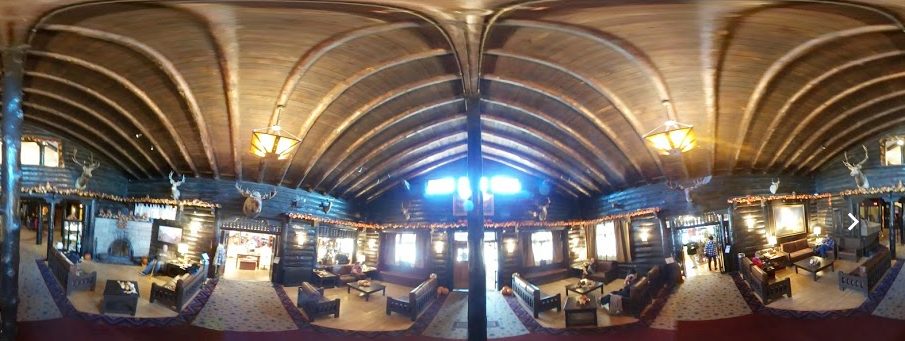
John took us to El Tovar hotel one of the first Sundays we were in town. He disclosed a secret; word was that any left over Prime Rib from the night before was now available in the Corned Beef Hash, part of an amazing breakfast with eggs Benedict, smothered in Hollandaise. Affordable once in a while, even for the “laundry workers.”
As the hotel’s website describes it, it was “one of the most elegant hotels west of the Mississippi” and its massive rustic beams have seen a lot of history. Built as one of the “Fred Harvey Lodges” that followed the trains west, it was the spot to be seen in. The room prices – well, I never stayed there, but cocktails on the back terrace overlooking the Canyon were pretty spectacular. Make sure a wealthy friend is buying.
After a blissful week or two at Albright housing, we got the word that we had to move. A trailer, located just outside the clinic, had become available and we had won the lottery. My wife was not best pleased. I was not too concerned, and appreciated the thirty yard commute.
The small quarters were in a row of several trailers, so privacy was pretty limited. We found that one group of locals gave us almost no peace. Field mice found the trailers a jolly refuge from their natural habitat, to our dismay. I would have liked to capture the look on my wife’s face when I explained to her that the mice were “protected” in the Park, and any diminishment of their ranks could result in a fine.
Later, we discovered a friendly Ranger who moonlighted as a taxidermist. Her small field mouse tableaus, complete with miniature suits and dresses, wire spectacles and pants, and a few with musical instruments as I recall, were all the rage – and she had a plentiful supply of specimens. Apparently, giving the mice a new “life” as a Beatrix Potteresque creation did not violate any laws – if one did not ask too many questions.
We were included in the staff meetings of the Resource Management Division, and it was fascinating! As the discussion moved around the room, we moved from the current river water levels and the number of commercial tours floating down to the areas on the rim that were moving into “prescription” for a controlled burn. The crazy things visitors had done, like the man who decided his life was in danger due to dehydration – so he whacked the top off of a several-hundred year old barrel cactus for a sip or two – and was later fined.
The most fascinating reports to me, other than my own brief offering, were the archaeological discussions, with new finds and vague locations. The history of pot-hunting in the area is well established, and any word that leaked out with any specificity was sure to attract those seeking to loot the sites and swipe valuable Anasazi artifacts. I was thrilled to be part of so much information and activity.
One day John decided it was time I discovered exactly what my research was all about. “Pay in cash, and save your receipt.” he said, and sent me to Tusayan. This town, located south and just outside the border of the Park, was our satellite community. Hotels, restaurants, campgrounds, and – an airport. This was the source of a fair number of the aircraft overflights that hummed over the Canyon each day, although not all. Las Vegas was also producing a great deal of the aerial traffic, both with helicopters and fixed wing air, although their time over our area of the Canyon was pretty limited.
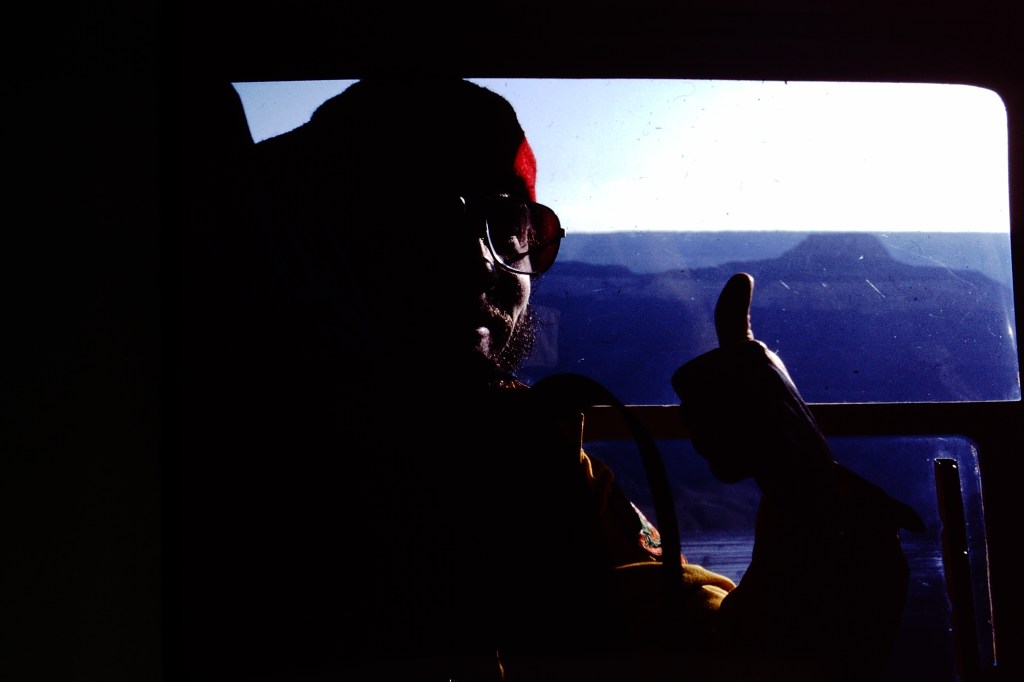
I was going up in an “Otter;” the small airplane that was supposed to be part of a new generation of quieter aircraft that attempted to diminish some of the controversy surrounding overflights. I was going UNDERCOVER!
I sat in the small airport waiting room, eyeing the aircraft fueling up outside. It was the smallest airplane I had ever flown in at that point in my life, and it looked REALLY small! The consolation was that every seat was a window seat. I clutched my camera and ignored the white knuckles. A good-sized group boarded; I don’t think we had any vacancies. The girth of some of my fellow passengers didn’t help my nerves. I had heard that one justification of all the overflights was that some folks just couldn’t manage to hike out into the backcountry. I could see that clearly. This crowd might not have made it much past the first overlook.
Well, it was a tiny aircraft, and the sensation was eerie. The Canyon was out there, seen through the Perspex windows with many nose-prints. Thermals made the plane bob and weave in a most unsettling manner. People leaned to try to look out the opposite windows, and it was extraordinarily claustrophobic.
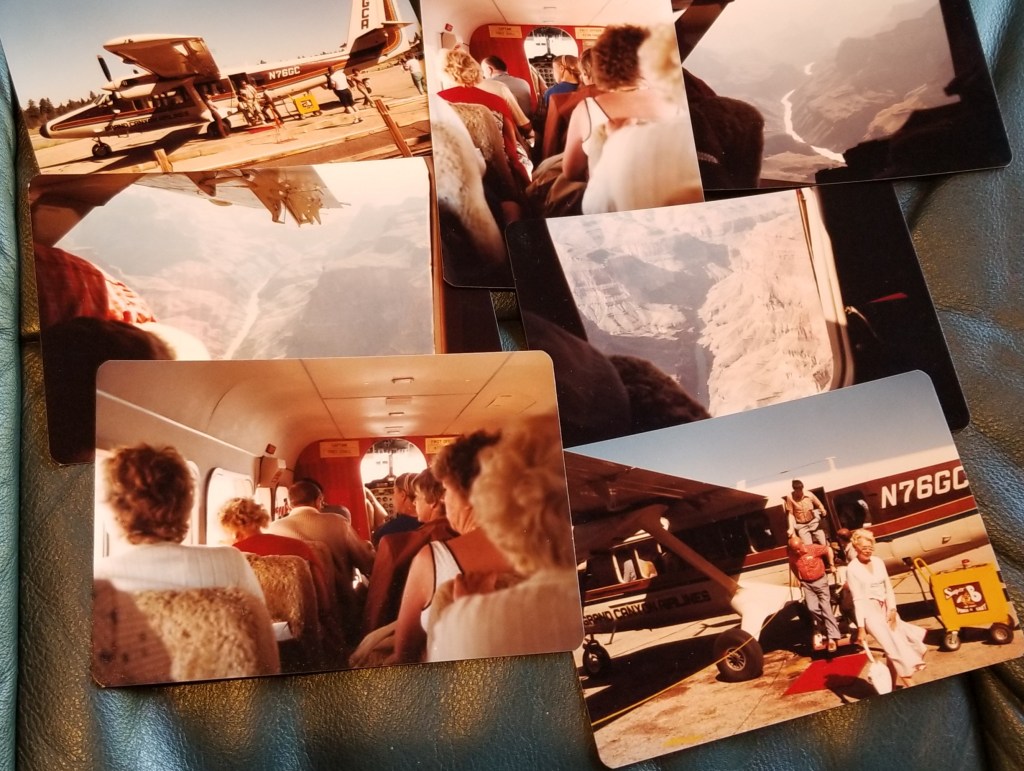
The whine of the motors, the cramped quarters, the unsettling motion; I was very relieved when we touched down with a thump back in Tusayan. Hundreds of people, perhaps thousands, had heard us buzz overhead. The Otter was not all that silent – not a Prius! But did those folks really mind, or object? And for those that had loaded up a backpack and sought remote corners of the Canyon, was there a special passion about this disruption we had caused?
Stay tuned.
It was clear, though, that a powerful group of wealthy individuals, owners of the various aircraft tour companies, both fixed wing and helicopters, were making a fair amount of money from their operations and would not take kindly to the little survey I was trying to put together. As I recall, there were about 17 or 18 companies flying tours on a regular if not daily basis. Many others would take to the air for a fee. I conjured up visions of “Da Boys from Vegas” sending up a team to rub me out or at least run me out of town, feather and tar optional. The aerial “Rat Pack?” Things were getting interesting.
 Mi Mayan Hamaca