John had arranged for a visitor. He was an expert on noise propagation and sound engineering from the Environmental Protection Agency, and had flown out from Washington, D.C. He was asked to evaluate the acoustics of the Canyon, and the situation with aircraft. It was a mighty tall order.
In preparation for his visit, I was asked to hike down into the Canyon and meet him (and the Park helicopter) at Phantom Ranch. I believe the helicopter had some supplies to haul down and so did not have the capacity to carry us both in and out of the Canyon. Contrary to popular belief, the National Park Service did try to be very conservative about using its helicopter, given the level of contention over this aircraft issue.
I got up the morning of his arrival, after a lovely night among the Phantom Ranch visitors and cottonwoods at the campground. The variety of polyglot conversations never ceased to amaze me, as folks from around the world could be found discussing the hike and the scenery deep in the Gorge in all their languages.
I headed down to the beach, which doubles as the helipad for the Ranch. After a few minutes the Park Service helicopter swung over the walls of the inner canyon and dropped gently down to join me. I climbed in and there was this tall, very friendly man from the EPA. We introduced ourselves, and lifted off. The echoes reverberating off the walls of the Inner Gorge can be quite impressive, and it was the first time I had flown out of the Gorge.
We flew around sections of the Canyon that had been particularly impacted by noise, at least as far as our reporting from backcountry sources could determine. I can remember him staring in amazement at the walls, and the way that the sound of our helicopter could echo back from the cliffs with a booming noisy clatter, and then just as suddenly fade as the sound was being echoed in another direction. One minute, they pushed the sound directly back at you, and in some places, especially side canyons, you were at the focal point of all of that noise. In other places, walls or shifts in the shape of the Canyon walls can reduce the sound to almost nothing.
The acoustics of the whole place almost defy description, and I felt some sympathy for him as he was tasked with developing a report on the subject. It was certain that noise was an issue, and was more of an issue in certain places than others, but the complex acoustics of the Grand Canyon create a vast and disparate pattern of noise – or lack thereof.
It was a lovely helicopter ride, an interesting discussion, and I remember being pleased that I did not have to haul my pack back out of the Canyon that afternoon.

While we were working on the report, several other Park Service locations contacted us to discuss the project. One state, in particular, was very interested in what we were doing. Hawai’i had several locations that had very similar concerns, particularly on the Big Island where helicopters line up to swing over the active volcano, leaning from side to side so that everyone can see and photograph the lava pools and “skylights,” the openings above a lava tube where the glowing lava is visible. Yes, I have taken that ride, and depending on what Pele is up to below, it can be quite spectacular.
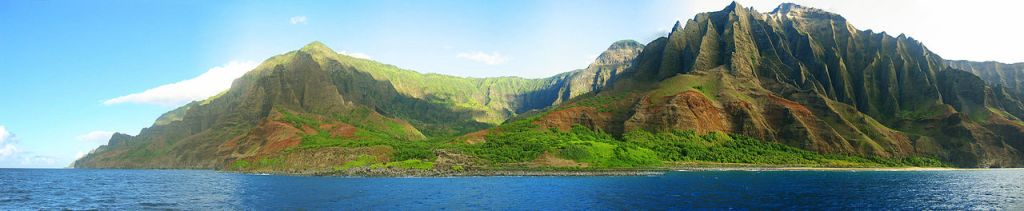
The island of Kauai, while not having an active volcano, has scenic cliffs along the Nā Pali Coast (actually a State Park) that also attract many air tour operators and their noisy craft.
 Mi Mayan Hamaca